
Protecting Religious Expression in Florida’s Public Schools
Why HJR 583 Matters More Than You Think

On Friday December 12th, 2025 Florida Rep. Chase Tramont (R-Port Orange) has filed a bold constitutional amendment that could reshape how religious expression is treated in classrooms across the state. HJR 583, if approved by the Legislature and then by 60 % of voters, would add Section 33 to Article X of the Florida Constitution and enshrine protections for students, parents, and school personnel regarding religious expression in public schools. Article from Click Orlando
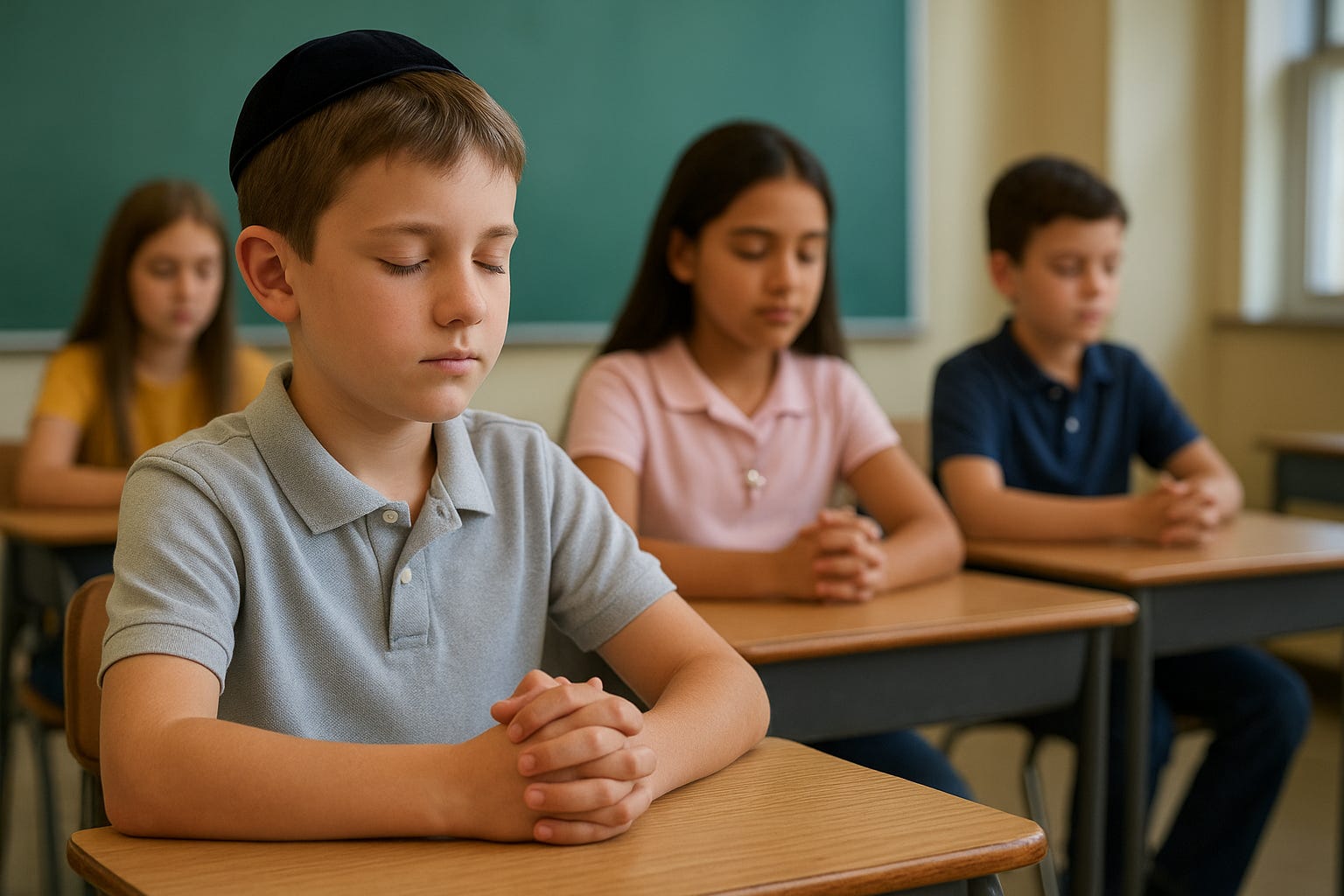
Here’s what the amendment says in its own language:
SECTION 33. Religious expression in public schools.
(a) A school district may not discriminate against a student, parent, or school personnel on the basis of a religious viewpoint or religious expression. A school district shall treat a student’s voluntary expression of a religious viewpoint on an otherwise permissible subject in the same manner that the school district treats a student’s voluntary expression of a secular viewpoint.
(b) A public school must allow:
(1) A student to express his or her religious beliefs in coursework, artwork, and other written and oral assignments free from discrimination…
(2) A student to wear clothing, accessories, and jewelry that display a religious message or symbol in the same manner and to the same extent that secular types of clothing, accessories, and jewelry that display messages or symbols are allowed…
(3) A student to pray or engage in religious activities or expression before, during, and after the school day in the same manner and to the same extent that a student may engage in secular activities…
(4) School personnel to participate in religious activities on school grounds which are initiated by students at reasonable times before or after the school day if such activities are voluntary and do not conflict with professional responsibilities. …
(c) Without supporting or discouraging student prayer, each public school must require teachers in first-period classrooms in all grades to set aside at least one minute, but not more than two minutes, daily for a moment of silence, during which a student may not interfere with other students’ participation.
(d) Each high school participating in a championship contest or series of contests must have the opportunity to make brief opening remarks, if requested by the school, using the public address system at the event. Remarks may include student-led or school personnel-led prayer, may not be derogatory, rude, or threatening, and may not be longer than two minutes per school.Proposed amendment to Article X of the Florida constitution (HJR 583)
This Is About Upholding Constitutional Liberties
There’s something fundamentally American about protecting freedom of conscience. The First Amendment doesn’t just protect belief, it protects expression of belief, which is exactly what this amendment is designed to affirm in Florida’s own Constitution.
Right now, Florida law already prohibits discrimination based on religious expression in schools. But codifying these protections at the constitutional level means students and staff don’t have to hope an administrator or school district interprets current law correctly. It means consistent, statewide protection for expression that is already constitutionally protected under the U.S. and Florida Constitutions.
This is about expanding liberty, not imposing religion.
Opponents Will Say… and Why They’re Wrong
Opponents will say this amendment is unnecessary because students already have religious rights.
In theory, yes, but many students and educators report that those rights are not honored in practice. Teachers and students have been discouraged from mentioning faith in assignments, blocked from forming faith-based clubs on equal terms, or warned that even silent prayer could violate policy. Clarifying the right in the constitution prevents uneven enforcement and helps ensure all religious and non-religious viewpoints are treated equally.
Opponents will say this mandates prayer in schools.
It doesn’t. The amendment explicitly protects voluntary expression. It allows prayer and religious activity only to the same extent as secular activity, and it does not require anyone to pray or participate.
Opponents will say allowing staff to participate in religious activities is coercion.
The amendment restricts this participation to voluntary, student-initiated activities at reasonable times and only when it doesn’t conflict with job responsibilities. That balance is consistent with Supreme Court precedent recognizing that government employees don’t lose their free-speech rights simply because they work for the government.
Opponents will say the moment of silence is a backdoor to prayer.
The language is non-directive. It doesn’t mention prayer or tell students how to use the time, it simply allows a brief pause for reflection or quiet thought. Courts have upheld such moments of silence when they don’t instruct specific religious activity.
Opponents will say this undermines academic standards by protecting religious content.
The amendment doesn’t say religious content is immune from grading standards. It says work must be evaluated on the same academic criteria as secular work. If a religiously motivated essay fails to meet academic requirements, it can still receive a low grade. The point is fairness, not favoritism.
Opponents will say opening remarks at athletic events amount to school-led prayer.
The amendment does not require prayer or religious content. It allows brief opening remarks, at the school’s request and discretion, with reasonable content limits. Voluntary remarks are not the same as compelled religious observance.
Why This Matters
HJR 583 isn’t about imposing faith on anyone, it’s about ensuring that when students exercise their rights, the government treats religious expression no differently than secular expression.
In America, freedom means the government cannot discriminate against people for their beliefs or how they express them. This amendment reinforces that principle where it matters most, in our schools, and in doing so upholds the constitutional liberties we all claim to cherish.
Excellent breakdown of the constitutional rationale here. The distinction between protecting voluntary expresion and mandating belief is critical—HJR 583 essentially codifies viewpoint neutrality at the state level. I've seen firsthand how ambiguous policies lead to inconsistent enforcement, where one teacher allows secular activism on posters but flags a Bible verse in the same medium. Making these protections explicit reduces administratve guesswork and aligns state law with federal precedent.