

I serve as the Southeast Regional Director for Citizens Defending Freedom, a Christian organization that equips churches and believers to engage in the public square. I am also a church elder, a lay pastor, a husband, a father, and a grandfather.
If you had asked me just a few years ago whether God would open a door that would one day bring Citizens Defending Freedom into the White House to represent the faith community, I would have had a hard time believing it. Looking back now, I can see God’s providence in ways I never expected.
That providence began even before I arrived in Washington. My friend Rebekah Ricks had originally been invited but was unable to attend. Since invitations from the White House Faith Office are not transferable, she contacted them and asked if they would consider extending the invitation to me in my role with Citizens Defending Freedom. They graciously extended the invitation and even invited my wife to join me. Looking back, I don’t see that as a coincidence. I believe God was opening a door, ensuring that Citizens Defending Freedom had a seat at the table for this important meeting.
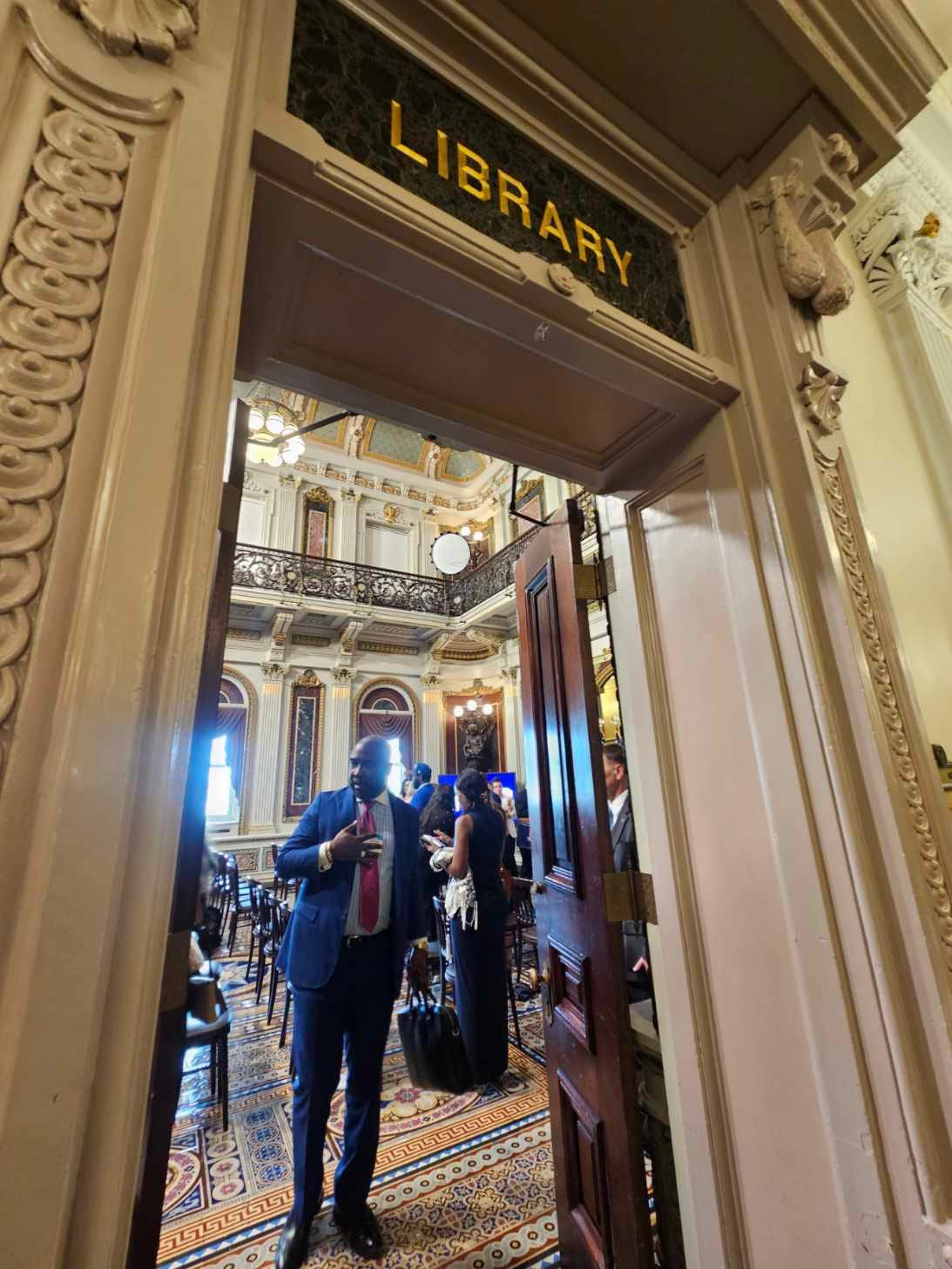
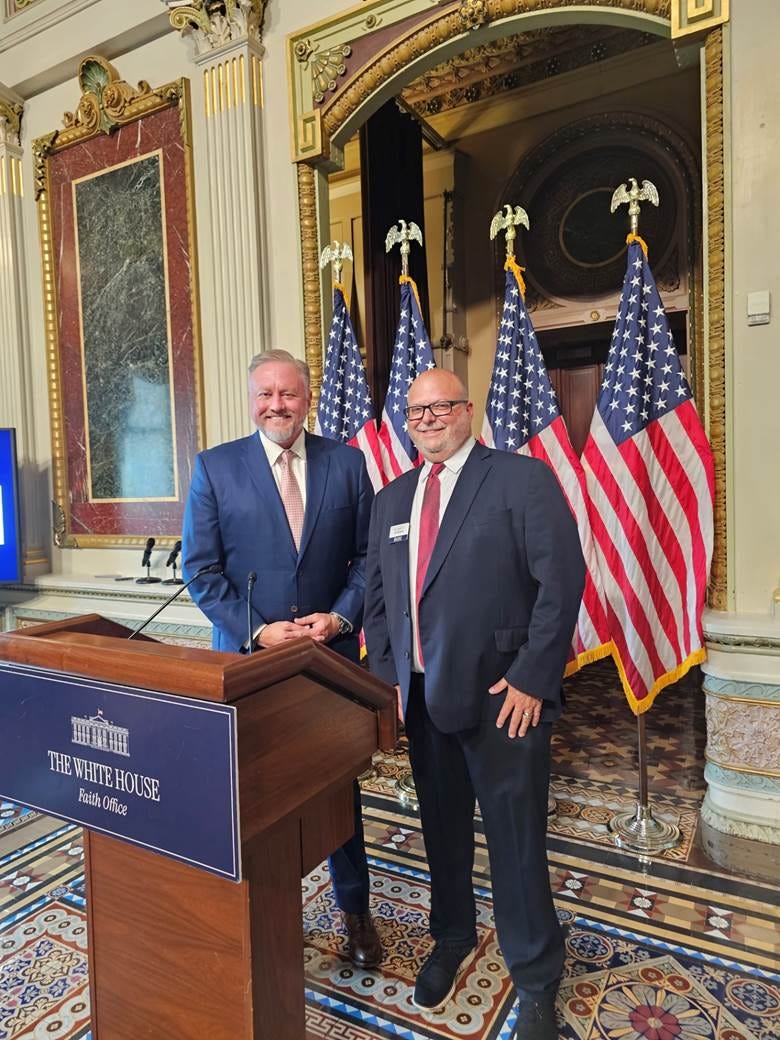
On July 21st, that door led to Washington, D.C., where I joined pastors, ministry leaders, and representatives from faith-based organizations across the nation for a gathering hosted by the White House Faith Office
.
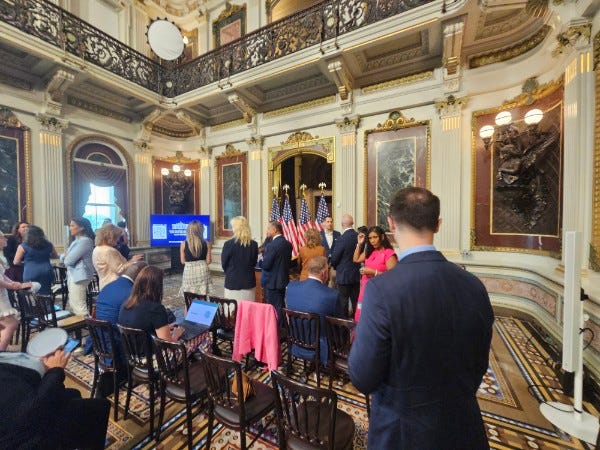
The meeting was held in the Indian Treaty Room inside the Eisenhower Executive Office Building. Before I share about the meeting itself, it’s worth taking a moment to appreciate the room where it was held. The moment you step inside, you immediately sense that you’re standing in a place where history has been made.
The room is lined with marble, cast iron balconies, and a ceiling patterned with stars used for navigation. Beneath your feet, the original English tile floor still holds a compass inlaid into its center. . Since the late 1800s, the room has hosted the signing of international treaties, and in 1955, President Eisenhower held the nation’s first televised presidential press conference there.
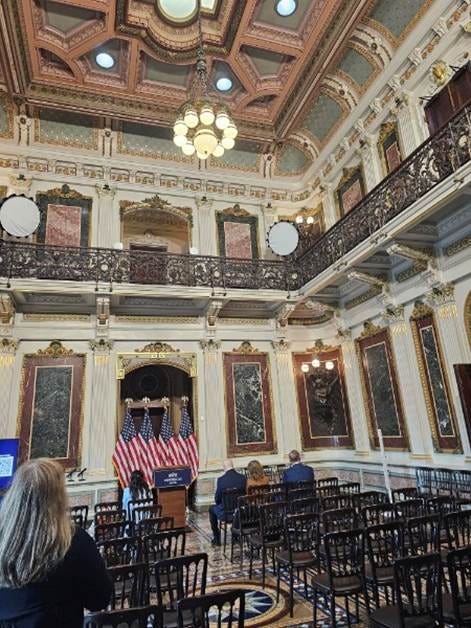
As I took my seat on July 21, I found myself thinking about the generations of history that surrounded me. The room had been built before my great-grandfather was born, and so many pivotal moments had taken place within those walls. It was humbling to realize that I was there, witnessing another chapter of history unfold.
More Than a Press Briefing
I want to be very clear about what this meeting was and what it wasn’t
Before it began, we were told there would be no video recording or livestreaming. The conversation was intended to be candid, not performed for an audience. We were free to discuss what we learned afterward, but the meeting itself was designed to encourage honest conversation, not generate sound bites.
The speakers weren’t there to deliver prepared remarks. They wanted to hear from the pastors, ministry leaders, and organizations in the room. They encouraged us to stay in touch after the meeting because they wanted to know what we were seeing in our communities and what challenges churches and ministries were facing.
That makes complete sense. The people in the room represented churches, ministries, nonprofits, and organizations serving communities across the nation. While Government can create policy, it can’t replace the work being done every day by pastors, churches, and ministries as they serve their neighbors and meet needs at the local level.
It’s also important to mention what we were not there to do. We were not there to endorse candidates, discuss campaign strategy, or talk about elections. If that had been the purpose, I don’t think many people in the room would have accepted the invitation. We were there to discuss faith, religious liberty, and the vital role churches and ministries play in strengthening our communities.
What I Witnessed
Many of the speakers mentioned the President’s energy and work ethic. They described a man that people decades younger than him struggle to keep up with. Martin Marks mentioned it. Tom Homan mentioned it. Sebastian Gorka talked about it. But the most compelling account came from Will Scharf, Assistant to the President and White House Staff Secretary.
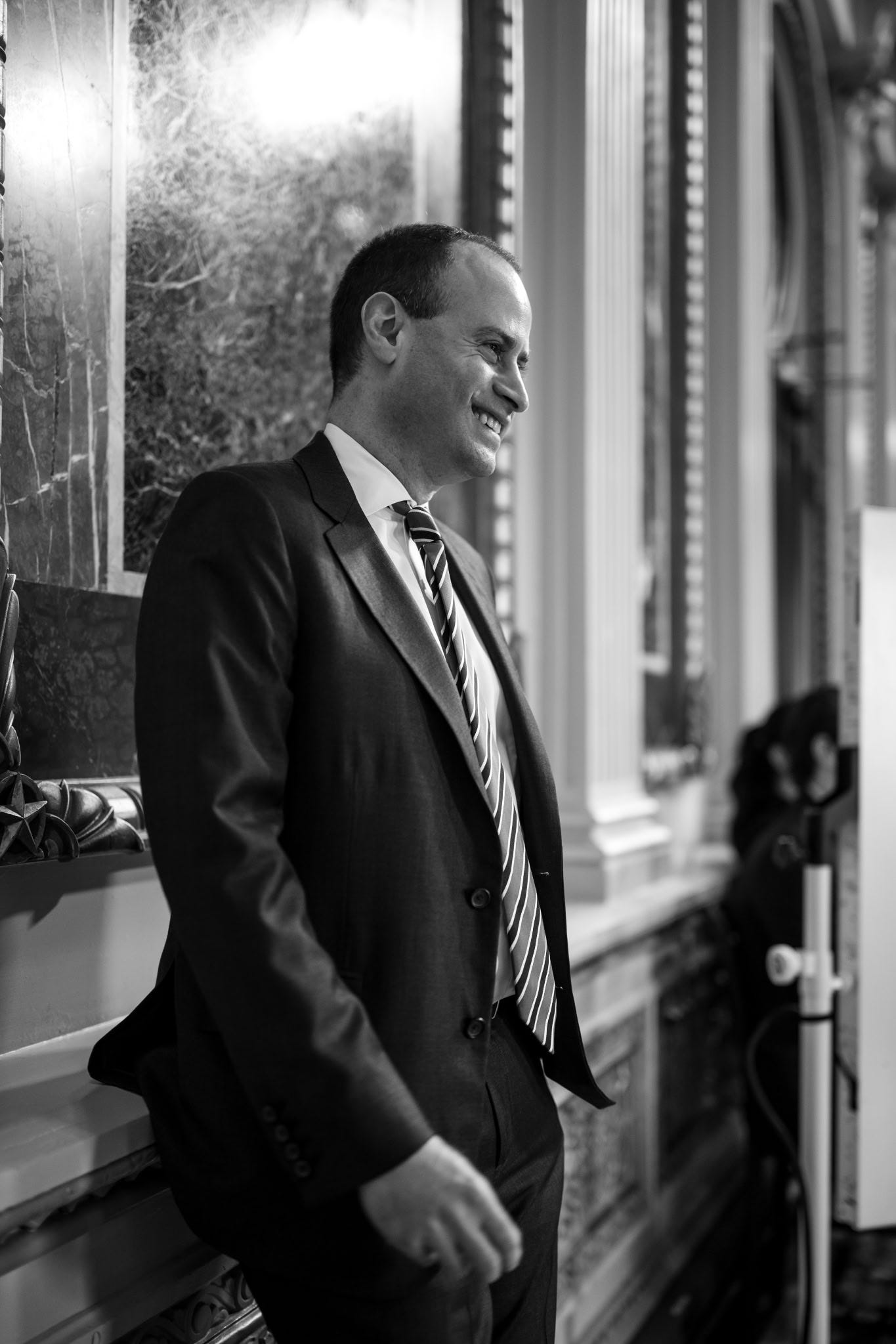
He works in the building every day. He said he is usually the second person to arrive in the morning and the second to last to leave at night, right behind the President himself. What he and the others described was a schedule that nobody, regardless of age, seems able to keep up with.
I’m simply telling you that multiple people who work around the President every day chose to describe him as a man with a tireless work ethic.
Another thing I noticed was how naturally faith became part of the conversation. The speakers weren’t hesitant to talk about prayer, their faith, or the role it played in their work. It wasn’t forced, and it didn’t feel like a talking point. It was simply part of who they were.
Tom Homan, for example, didn’t just talk about immigration. He talked about people’s ability to worship freely. He said the administration does not want to prevent anyone of receiving an education, accessing medical care, or the ability to practice their faith. That message was consistent with the tone of the meeting. Even when difficult issues were discussed, the conversation consistently returned to faith, religious liberty, and the role of the Church in our communities.
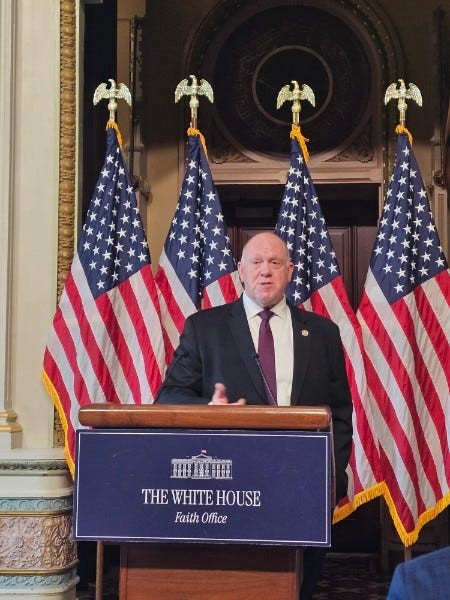
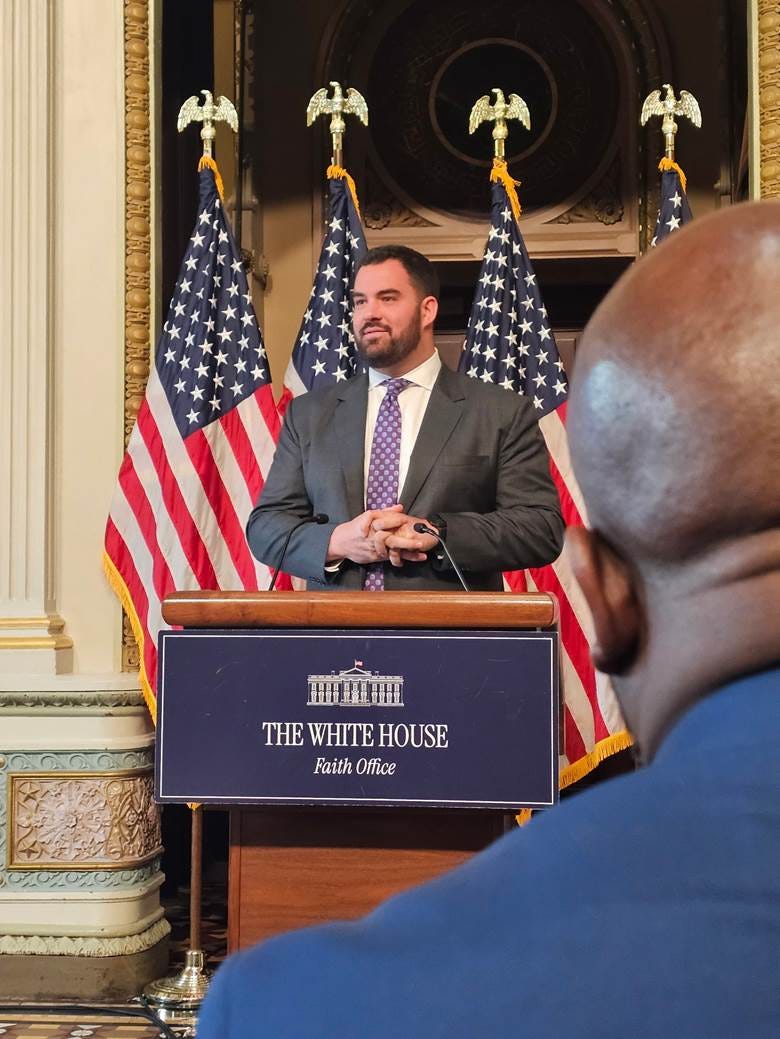
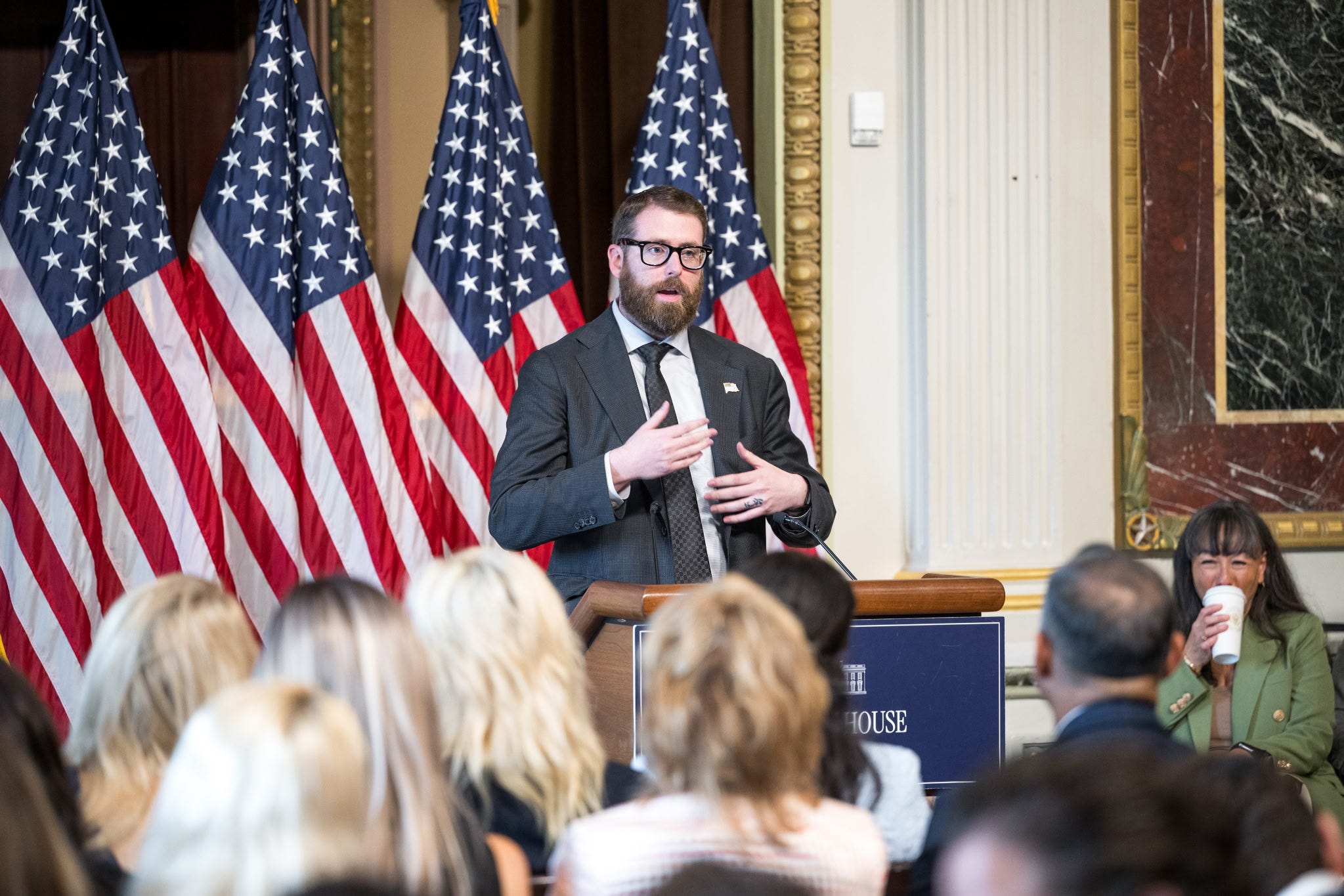
As the meeting continued, I found myself paying less attention to who was speaking and more attention to the common thread running through the entire conversation. These were people serving in government who spoke openly about their Christian faith and viewed churches and ministries as partners, not spectators.
They Were Talking About Legacy
The speakers kept talking about the next generation.
As I listened to each speaker, one thing became clear. They were talking about the future. They were talking about building relationships with the faith community, strengthening churches, protecting religious liberty, and investing in work that may not bear fruit for decades.
That is very different from the way we normally hear politicians talk. Too often the focus is on the next election, the next news cycle, or the next political victory. None of these conversations were like that. They were talking about legacy.
I believe that’s why Citizens Defending Freedom was invited into the room. Our work has never been about winning one election or passing one piece of legislation. It’s about equipping citizens, strengthening families, supporting churches, and defending the freedoms that allow our children, our grandchildren, and future generations to flourish.
Government has an important role, but it cannot disciple a child, shepherd a congregation, or build a strong family. Those responsibilities belong to families and to the Church. That’s why these conversations mattered.
Think 100 Years Ahead
One of the speakers challenged everyone in the room to think 100 years into the future. Not two years. Not four years. One hundred years.
That’s not how we usually think. Politics is measured in election cycles. The news is measured in hours. Social media is measured in minutes. We naturally focus on what happens next.
But the Church thinks differently. Every pastor who disciples a young believer, every parent who teaches their children the Scriptures, and every church that invests in its community is doing work that may not bear its greatest fruit for generations. That was the kind of thinking I heard throughout the day.
It made me think about the purpose of Citizens Defending Freedom. Our mission has never been about winning a single election or passing a single piece of legislation. It is about building a culture where our children, our grandchildren, and generations we may never meet can live in freedom, understand the truth, and carry those values forward.
The challenge wasn’t simply to think about tomorrow, but to leave something worth inheriting to our future generations.
Why It Mattered
On my way home from Washington, I kept thinking about why Citizens Defending Freedom had been invited into that room.
We certainly weren’t there because we’re a political organization. We were there because we work with the faith community. Every day, our employees and volunteers meet with pastors, attend school board and county commission meetings, work with parents, defend religious liberty, and help citizens become engaged right where they live.
That’s exactly what the people in that room wanted to hear about. They weren’t asking us to become an extension of the government. They wanted to know what was happening in our communities and how churches and ministries could make a difference.
The Bible doesn’t tell us to hand these responsibilities over to the government. It calls the Church to make disciples, care for the poor, strengthen families, and love our neighbors. Government has an important role, but it can never replace a faithful church, a strong family, or citizens who are willing to serve their communities.
That’s what made that day in Washington so encouraging to me. No one suggested that government alone could solve the challenges facing our nation. Instead, there was a recognition that the Church has a unique and essential role that government can never replace.
One Final Observation
Over the last several months, this administration has done more than simply talk about religious liberty. It has produced reports, recommendations, guidance, educational resources, and a feature-length documentary that reflect many of the same priorities I heard discussed in Washington.
If you aren’t familiar with these resources, I encourage you to take the time to read and review them for yourself before forming an opinion. Whether you ultimately agree with every recommendation or not, it’s important to consider the original documents and their full context rather than relying solely on headlines, summaries, or someone else’s interpretation.
I especially recommend these five resources:
1. 2026 Report by the Task Force to Eradicate Anti-Christian Bias (April 30, 2026)
Approximately 200 pages documenting anti-Christian bias across 17 federal agencies and recommending reforms.
Department of Justice:
https://www.justice.gov/opa/pr/task-force-publishes-report-eradicating-anti-christian-bias-and-restoring-religious-liberty
Department of Education:
https://www.ed.gov/about/news/press-release/task-force-publishes-report-eradicating-anti-christian-bias-and-restoring-religious-liberty
Read the Full Report: https://www.justice.gov/opa/media/1438506/dl?inline

2. Presidential Religious Liberty Commission Final Report (June 26, 2026)
A 224-page report based on seven public hearings and testimony from more than 100 witnesses, examining the foundations of religious liberty in America, current challenges, and recommendations for the future. The Commission also produced a concise two-page executive summary for readers who want a quick overview before diving into the full report.
Two-Page Executive Summary:
https://www.justice.gov/religious-liberty-commission/media/1450071/dl?inline
Full 224-Page Report:
https://www.justice.gov/religious-liberty-commission/media/1449896/dl?inline

Department of Justice Announcement:
https://www.justice.gov/opa/pr/president-trumps-religious-liberty-commission-delivers-historic-report-draft
Oval Office Presentation (PBS):
https://www.pbs.org/newshour/politics/watch-trump-receives-report-from-religious-liberty-commission-in-the-oval-office
White House Faith Office:
https://www.whitehouse.gov/priorities/faith/
3. By Dawn’s Early Light Documentary
Produced alongside the work of the Religious Liberty Commission and currently available to stream free.
https://bydawnsearlylightfilm.com

4. U.S. Department of Education Guidance on Prayer and Religious Expression in Public Schools
Updated guidance explaining the constitutional rights of students, parents, teachers, and school employees regarding prayer and religious expression in America’s public schools.
Department of Education Announcement:
https://www.ed.gov/about/news/press-release/us-department-of-education-issues-guidance-prayer-and-religious-expression-public-schools

5. Department of Justice Updated Religious Liberty Guidance (July 23, 2026)
The first major update to DOJ religious liberty guidance since 2017, incorporating significant Supreme Court decisions and directing federal agencies to give greater consideration to religious liberty in rulemaking, enforcement, and employee accommodations.
DOJ Press Release:
https://www.justice.gov/opa/pr/acting-attorney-general-blanche-issues-updated-guidance-strengthen-federal-religious-liberty
Read the Full Guidance:
https://www.justice.gov/opa/media/1453756/dl?inline

It’s one thing to speak about religious liberty. It’s another to produce reports, recommendations, guidance, educational resources, and policy that reflect those same priorities. One example is the Department of Justice's updated Religious Liberty Guidance, which sets out 21 principles directing every federal agency on how to protect religious liberty. It also includes a principle that had not previously been included in the Department of Justice's federal religious liberty guidance: recognizing that the government should not interfere with the right of parents to raise their children according to their faith.
Whether every recommendation is ultimately adopted remains to be seen. But these documents demonstrate an administration making a genuine effort to put its words into action.
My encouragement is simple. Read the reports. Watch the documentary. Read the guidance. Then discuss them with your pastor, your church leadership, your family, and your friends. Read the original sources, think critically, and come to your own conclusions. Regardless of where you land, you’ll be better informed because you took the time to examine the evidence for yourself.
I’m grateful that Citizens Defending Freedom had a seat at that table. More importantly, I’m grateful that God continues to open doors for His people to faithfully represent Him wherever He places them. My prayer is that we will have the wisdom and courage to walk through those doors whenever He opens them.
The future of our nation will not ultimately be determined by what happens in Washington, D.C. It will be determined by what happens when God’s people faithfully live out their calling in their homes, their churches, and their local communities.
“Unless the Lord builds the house, those who build it labor in vain.”
Psalm 127:1 (ESV)